What does value for money mean
This article is part of our series highlighting how your rent is used to improve services, read more here.
Value for money is about making responsible use of the resource available to us while delivering services that matter to tenants. Some people may think of value for money as receiving the lowest possible charge for a service, others may focus on receiving the best possible level of service. As a not-for-profit charitable organisation, Albyn has to assess the balance between these expectations and ensure that it is a good steward of its finances, considering not just what a service costs but the quality, outcomes and lasting benefit of the investment.
This means looking beyond the immediate cost of something and considering its quality, the benefits it delivers and how long those benefits will last.
Housing Management
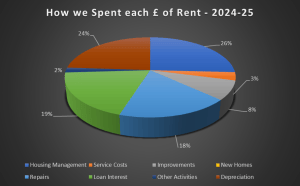
More than a quarter of our expenditure goes towards housing management. This covers the work involved in managing your homes and delivering services to tenants.
From managing tenancies and collecting rent to handling enquiries and supporting tenants, these activities are central to running a housing organisation.
Having the right people, systems and processes in place helps us deliver services, respond to tenants’ needs and manage our homes effectively.
We continually look at how we can improve the way we deliver services, making it easier for tenants to access the information and support they need.
Investing in technology and improving our processes can help reduce unnecessary administration, make better use of staff time and give tenants more choice in how they interact with us.
Repairs and improvements
Our homes are one of our biggest assets, and maintaining them to a good standard is central to the service we provide. Keeping our homes safe, secure and in good condition is one of our most important responsibilities.
Repairs expenditure covers the work needed to put things right when something goes wrong in a home. Whether it’s a leaking tap, a faulty heating system or a more significant repair, responding effectively helps maintain the quality of our homes and provides tenants with a safe and comfortable place to live.
We also need to consider how we can prevent problems from occurring in the first place, helping to reduce repeat repairs and avoid more expensive work in the future. While it can sometimes be cheaper to carry out a short-term repair, investing in the right materials, improvements and maintenance can prevent recurring problems and reduce the need for more costly work in the future.
Alongside day-to-day repairs, we invest in improvements to our existing homes. This can include replacing ageing components, and improving the condition, quality and efficiency of our properties. These investments help us protect the long-term value of our housing stock, improve the experience of living in an Albyn home and make sure our properties continue to meet tenants’ needs.
Loan interest, and depreciation
As a developing landlord, investing in new homes is essential to ensuring that we can continue to provide affordable housing for the future. These costs support our ability to grow our housing stock, helping us to meet the needs of a growing Highland population. This is particularly important given the scale of the housing shortage, with the Highland Council declaring a Housing Challenge and identifying a need for 24,000 additional homes over the next 10 years.
Our investment isn’t just about welcoming new tenants, though. We also need to plan for the future of our existing properties, recognising that some older homes will eventually reach the end of their useful life. Having a sustainable programme of development helps ensure we can continue to provide quality homes, replacing properties where necessary.
Depreciation recognisees the reduction in the value of existing assets over their useful lives. It helps reflect the long-term cost of owning and providing homes.
Service costs and other activities
A smaller proportion of our expenditure goes towards service costs and other activities. These are the costs associated with providing the additional services needed to support the operation and management of our homes and wider activities. Although this represents a relatively small part of our overall spending, these services still play an important role in helping us deliver our responsibilities effectively.
Helping someone through a difficult financial period, supporting them to remain in their home or investing in an initiative that benefits a whole community can have lasting benefits for individuals and society. Our Tenant Support Fund is one example of how we use our resources to help tenants experiencing financial hardship. This support can make a meaningful difference to people’s lives while helping to prevent problems from escalating.
Every part of our expenditure needs to be considered carefully to ensure that it contributes appropriately to the work we do.
Making informed decisions about how we spend
Every pound we spend is a pound that cannot be spent elsewhere. That’s why we carefully consider our priorities, looking at where our resources will make the greatest difference.
This means regularly reviewing how we deliver services, seeking opportunities to work more efficiently and making informed purchasing decisions. It also means looking beyond immediate costs by investing in preventative maintenance, and early intervention to support tenants, helping avoid greater problems becoming more serious, and expensive in the future.
By taking a longer-term approach, we can make responsible use of our resources, deliver services that matter and invest in the quality and sustainability of our homes.
We recognise there is always more we can do to improve and we remain committed to delivering the best possible service, but we believe that our performance results alongside how our rents compare with other social landlords, provides tenants with fair value for money evaluation.